
When the Paris Agreement was finalised in 2015, it set an ambitious global course: to limit temperature rises to well below 2°C above pre-industrial levels, with an aspirational target of 1.5°C. Few at the time could have foreseen just how pivotal battery energy storage systems (BESS) would become in realising those goals. The agreement called for a fundamental reimagining of how energy is generated, distributed, and consumed. A decade on, battery storage has evolved from a supporting technology into one of the defining pillars of the energy transition.
The economics of scale
The contrast between 2015 and 2025 is striking across every dimension. Early BESS projects rarely exceeded 10MW and typically delivered a single service, such as frequency response or time-shifting. Today, installations of 50MW to 100MW or more are commonplace, with gigawatt-scale, co-located projects now standard in markets including the EU, Texas, and Australia. This rapid scaling reflects both increased industry maturity and the growing complexity of modern grid requirements.
More fundamentally, BESS has transitioned from bespoke engineering to standardised, commodity-based products. Before 2015, projects were custom-designed, supported by fewer than five major global suppliers, and carried costs of around £800/kWh. Each installation was effectively a prototype. By 2025, standardised systems are being deployed for under £100/kWh, with more than 100 suppliers competing across the value chain. This commoditisation has significantly reduced both technical and commercial risk, transforming battery storage from a challenging proposition into a financeable, investable asset.
Technological innovation
The battery chemistry landscape has been completely reshaped. Early stationary storage relied heavily on sodium-sulphur and lead-acid technologies, with nickel manganese cobalt (NMC) lithium-ion batteries positioned as the premium option. Today, lithium iron phosphate (LFP) dominates, accounting for more than 95% of new grid-scale installations globally.
This shift is not driven by cost alone. LFP offers superior thermal stability, removes dependence on cobalt, and delivers longer system lifecycles—key advantages for large-scale, long-term infrastructure.
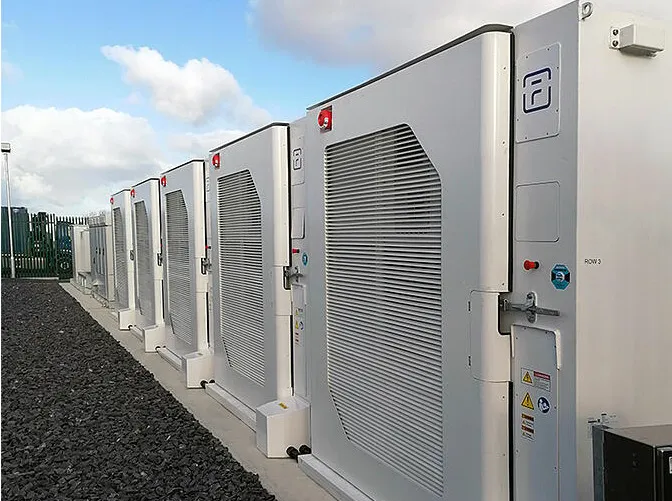
Physical system design has advanced in parallel. A decade ago, fitting 1MWh into a 40-foot container using NMC chemistry was standard. Today’s systems can house 6MWh or more in a 20-foot container—representing a twelve-fold improvement in volumetric energy density. These gains translate directly into improved project economics: reduced land use, simplified grid connections, and lower balance-of-system costs. In practical terms, a site capable of hosting 10MWh in 2015 can now support 120MWh or more.
Looking ahead, sodium-ion batteries are emerging as a potential successor to LFP and the next frontier in grid-scale storage. The abundance of sodium gives it the potential to be significantly cheaper over time, positioning it as a compelling alternative to lithium-ion technologies. BloombergNEF forecasts that sodium-ion batteries could account for 23% of the stationary storage market by 2030—equivalent to more than 50GWh of capacity. That figure could rise further if manufacturing processes and supply chains continue to align with existing lithium-ion infrastructure.
BESS as an investable asset class
Commercial structures have matured alongside the technology itself. Early UK projects were heavily dependent on innovation funding through Ofgem. By 2025, the market has evolved towards merchant revenue stacking and a range of revenue-firming mechanisms. These include energy arbitrage, frequency response services such as Dynamic Containment, capacity market payments, and participation in the balancing mechanism.
Long-term service and maintenance agreements have also evolved—from limited, high-risk offerings to comprehensive packages that support predictable performance and revenue. Together, these developments have made BESS projects genuinely bankable and increasingly attractive to institutional and private capital.
Data as the foundation for investment
Across markets and technologies, data is becoming a cornerstone of storage strategy. High-resolution, hourly carbon emissions data is critical for optimising asset deployment, verifying environmental impact, informing investment decisions, and supporting robust ESG reporting. It also plays a vital role in building trust with policymakers and local communities.
As BESS deployment accelerates, the industry requires consistent frameworks for measuring and validating impact. A growing number of initiatives are addressing this need, including our work with LCP Delta and the UK’s National Wealth Fund to develop an industry-first carbon emissions calculator. This tool enables asset managers to track and certify the emissions avoided through BESS operations, providing standardised, auditable evidence of impact.
Verified data builds confidence, attracts capital, and equips investors and policymakers with the proof points needed to support the energy transition with conviction.
The grid of the future
The UK’s energy system is on the cusp of profound transformation. Peak demand is projected to rise from 58GW today to 144GW by 2050—a 150% increase. Annual electricity consumption could nearly triple, from 290TWh to 800TWh. Meeting this demand sustainably will require renewable capacity to expand from 49GW to around 250GW. Storage must scale in parallel, capturing surplus generation and delivering flexibility across the system.
In the decade since Paris, battery storage has progressed from a promising innovation to indispensable infrastructure. Today’s systems stabilise grids, enable renewable integration, deliver essential ancillary services, and generate verifiable carbon savings. Looking ahead, BESS will offer an ever-broader suite of services. Increasingly, storage will be co-located with renewable generation and data centres, forming localised microgrids that deliver resilient, decentralised energy at the point of demand.
With continued advances in battery chemistry and manufacturing efficiency, BESS is poised to underpin an energy transition that is not only achievable, but technically superior and economically compelling at scale.